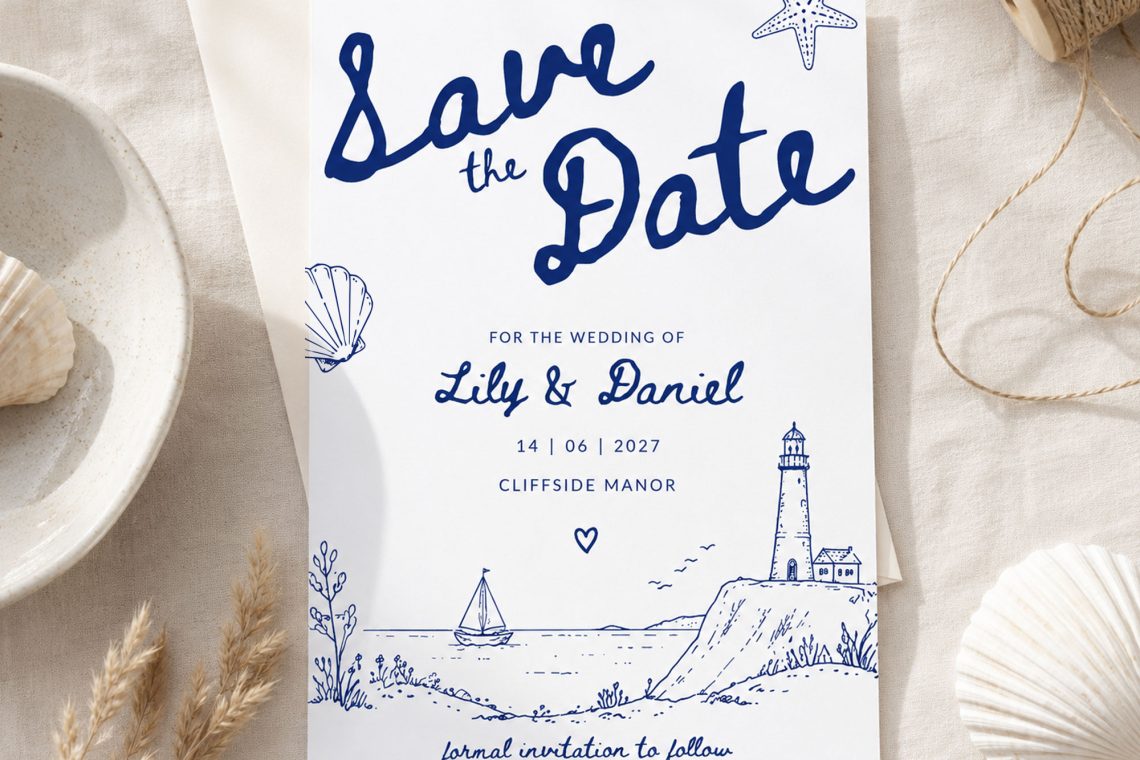
Planning your wedding stationery? Here’s when to send save the dates, what to include and how to make sure your guests have enough time to plan.
Once you’ve booked your wedding venue and confirmed your date, one of the first things to think about is letting your guests know.
Save the dates give your guests advance notice of your wedding, allowing them to make travel arrangements, book accommodation and keep the date free before your formal invitations arrive.
But how early should you send them? Do you actually need them? And what information should you include?
Here’s everything you need to know.
When should you send save the dates?
For most weddings, 6–12 months before your wedding date is a good timeframe.
However, the ideal timing depends on where you’re getting married, how far your guests need to travel and whether your wedding falls during a particularly busy time of year.
| Wedding type | Recommended timing |
|---|---|
| Local wedding | 6–8 months before |
| UK wedding with travelling guests | 8–12 months before |
| Destination wedding | 10–12 months before |
| Wedding during a holiday period | 9–12 months before |
These are guidelines rather than strict rules. The most important thing is giving your guests enough notice to make arrangements without sending the information so early that your plans are still likely to change.
For destination weddings
If you’re planning a wedding abroad, it’s worth sending save the dates around 10–12 months in advance.
Guests may need to arrange flights, accommodation, passports, childcare or time off work. Giving them plenty of notice makes attending your celebration much easier.
For weddings that involve particularly long-distance travel or fall during peak holiday periods, you can also let close family and friends know informally before your save the dates are ready.
What should you include on a save the date?
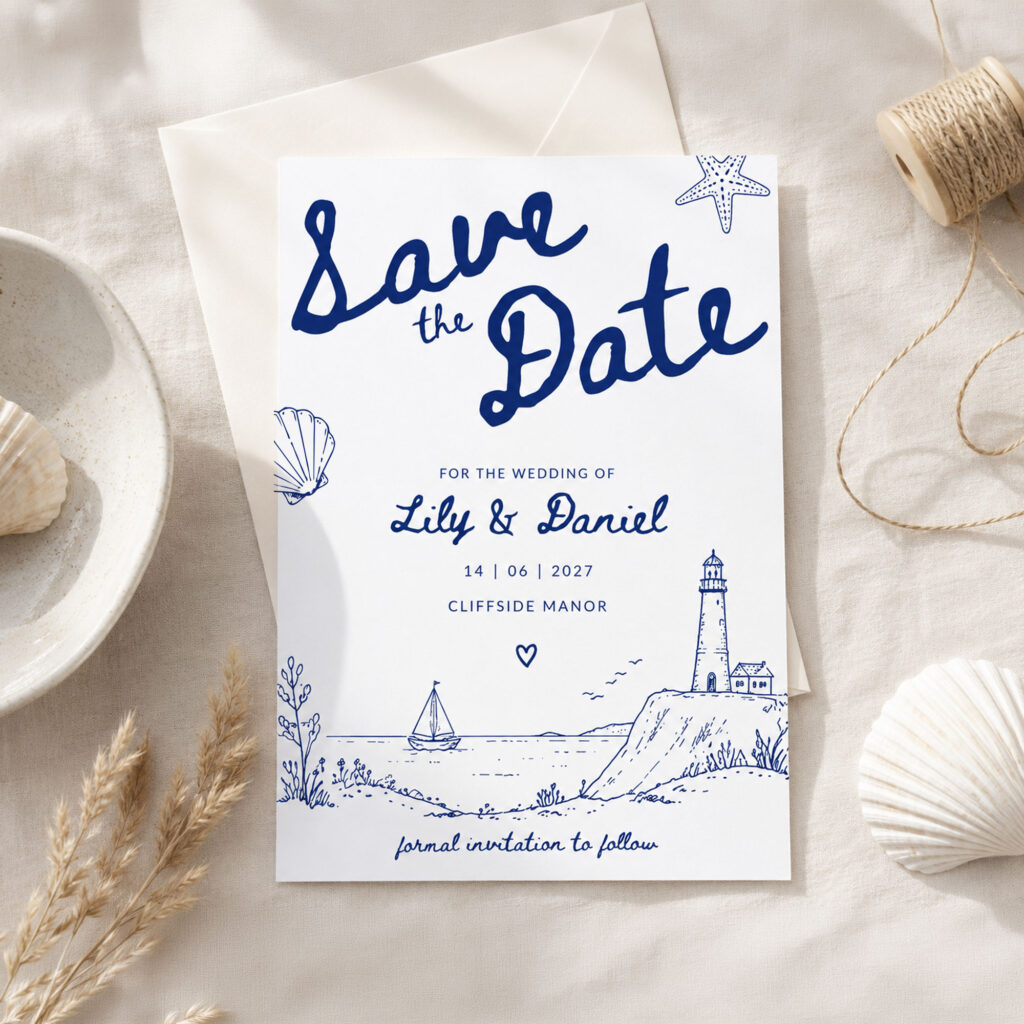
Unlike a formal wedding invitation, a save the date only needs a few essential details.
Include:
- Your names
- Your wedding date
- Your wedding location (city, region or country)
- A short message letting guests know that a formal invitation will follow
You don’t need to include your ceremony time, full wedding schedule, dress code or RSVP instructions at this stage.
If you’ve already created a wedding website, you can also include its address or a QR code so guests can find travel and accommodation information.
Example save the date wording
SAVE THE DATE
Emily & Daniel
Saturday, 12 June 2027
Bath, England
Formal invitation to follow
For a more relaxed wedding, you might prefer:
WE’RE GETTING MARRIED!
Emily & Daniel
12.06.2027
Save the date — we can’t wait to celebrate with you.
Invitation to follow
There’s no single correct way to word a save the date. A traditional design might call for something simple and understated, while a playful or contemporary design can have a little more personality.
Do you actually need save the dates?
Not necessarily.
Save the dates are particularly useful when guests need to travel, your wedding falls during school holidays or you’re planning a large celebration.
They give people the opportunity to organise their schedules before receiving the full invitation.
However, if you’re planning a smaller wedding, have a relatively short engagement or are inviting mostly local guests, you may decide to skip them entirely.
In that case, consider sending your formal invitations earlier than usual to give guests sufficient notice.
Who should receive a save the date?
Only send save the dates to guests you’re certain you want to invite to your wedding.
Once someone receives one, they’ll reasonably expect to receive a formal invitation later.
You don’t need to have every detail of your guest list finalised, but it’s worth confirming your intended invitations before sending anything.
If you’re inviting couples or families, make sure your wording clearly indicates who is included. This can help avoid confusion when the formal invitations arrive.
Should your save the dates match your wedding invitations?
They don’t have to, but choosing a consistent design can create a cohesive look across your wedding stationery.
Your save the dates are often the first glimpse guests have of your wedding style.
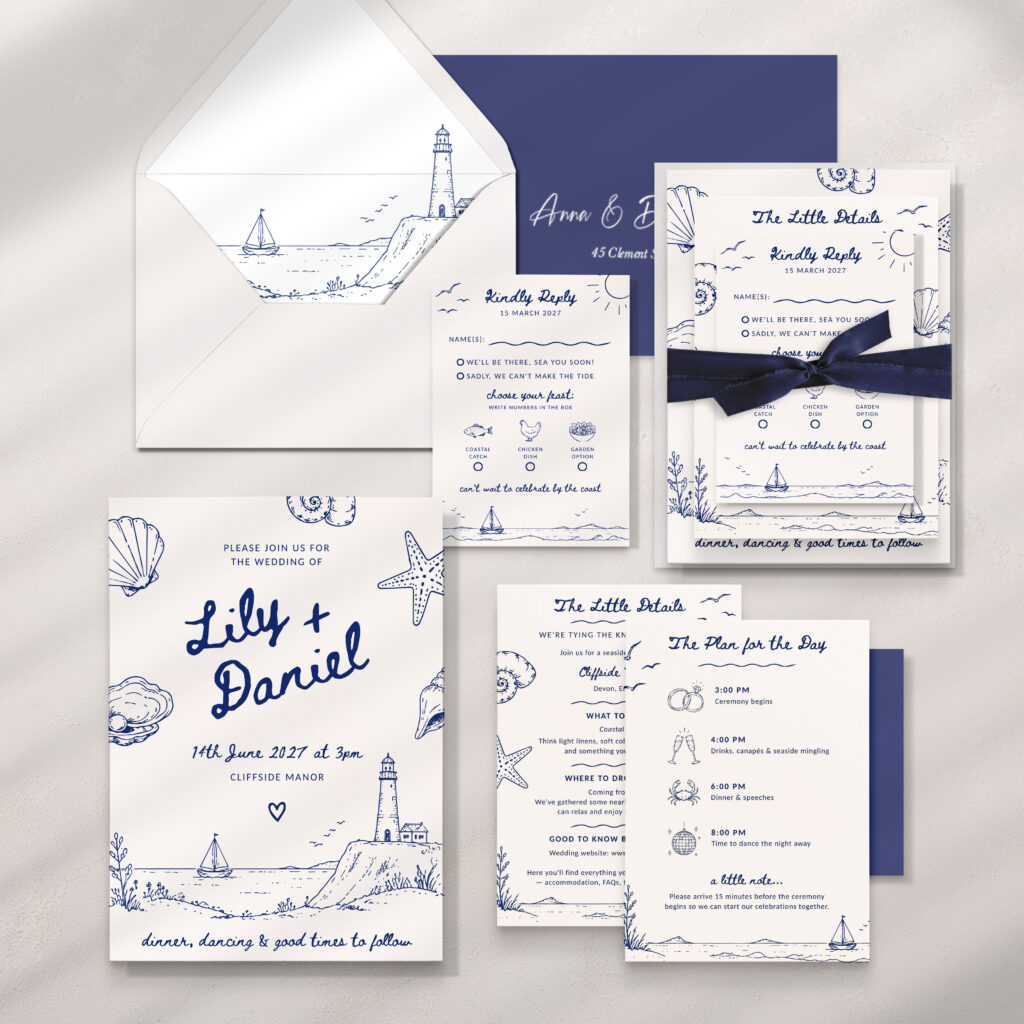
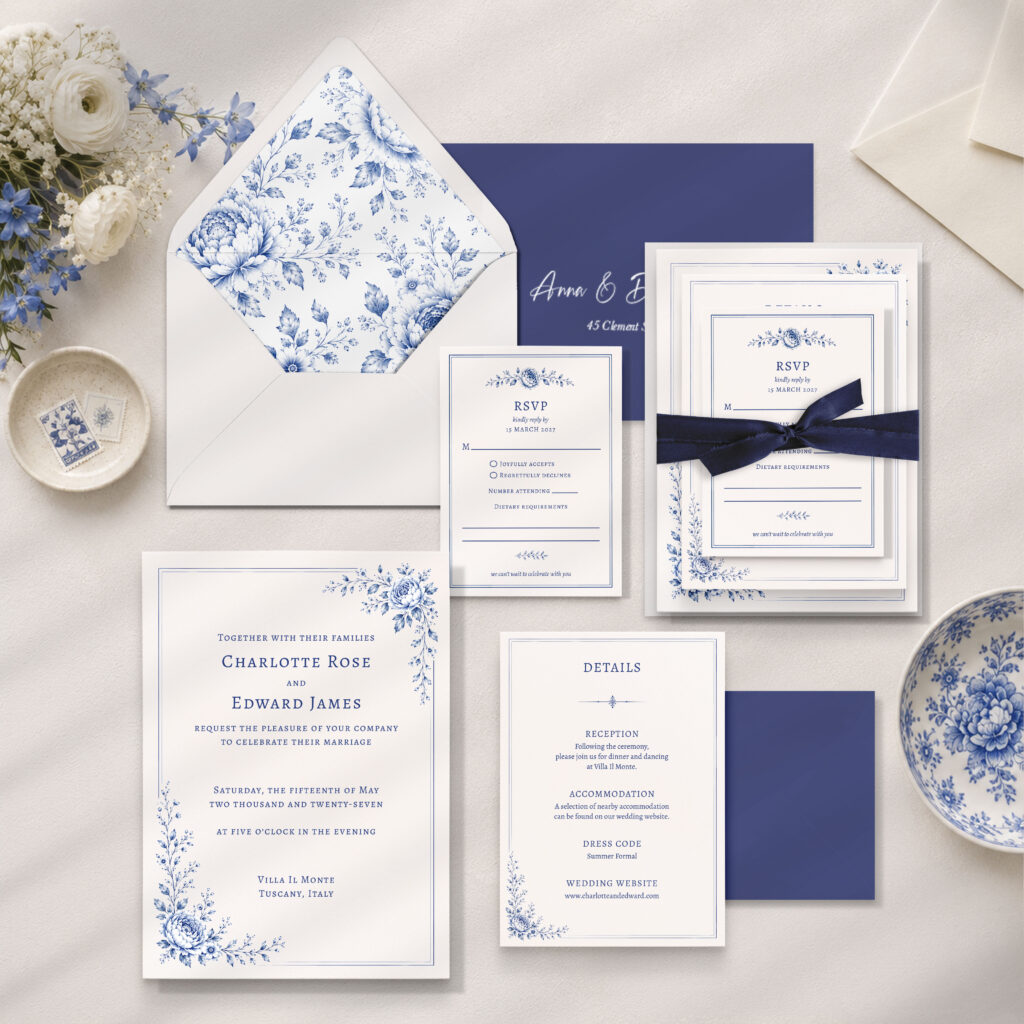
You might introduce your chosen colour palette, typography or illustrations, then carry those elements through to your invitations, menus, place cards and other stationery.
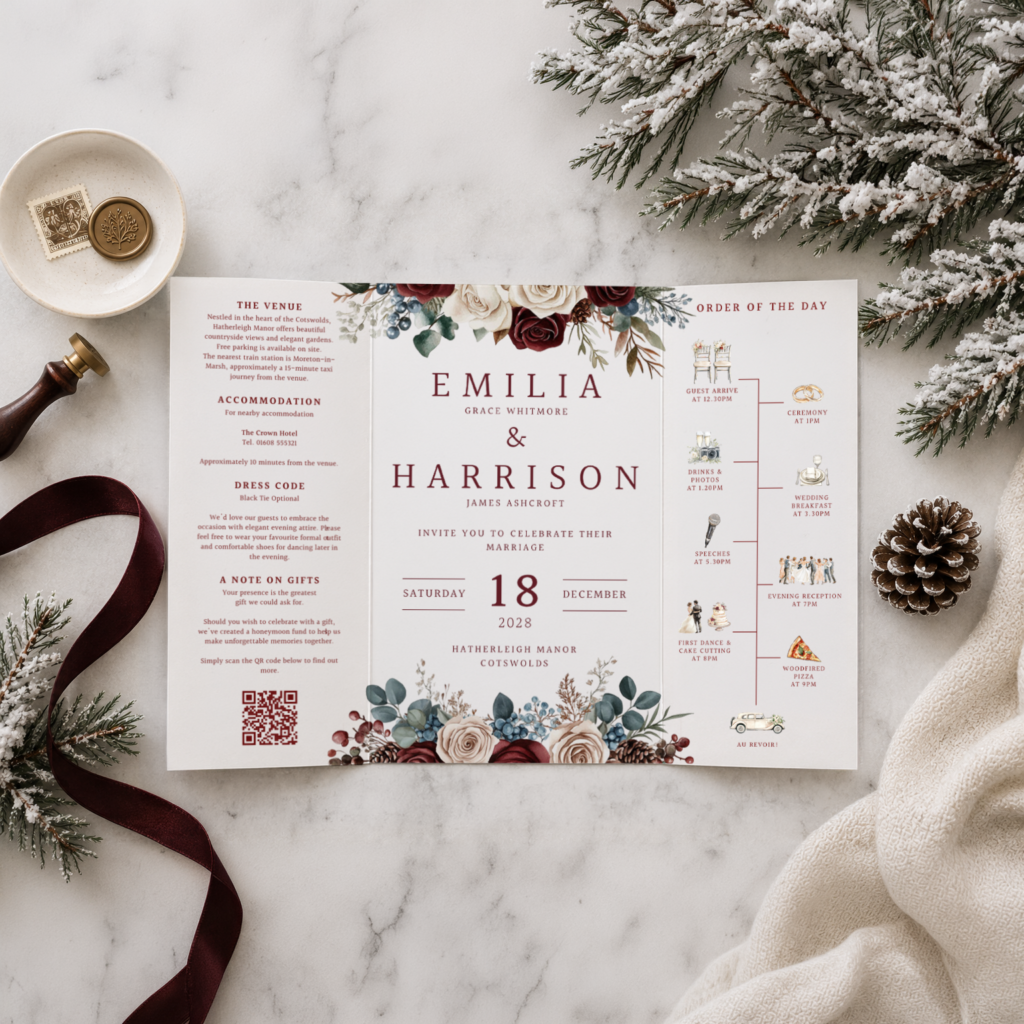
For example, a coastal wedding could feature illustrated shells and relaxed typography, while a black-tie celebration might use a monochrome palette and elegant serif lettering.
Keeping these elements consistent helps your stationery feel like one coordinated collection without requiring every piece to look identical.
Digital or printed save the dates?
Both are perfectly suitable, and the best option depends on your budget, guest list and personal preference.
Printed save the dates
Printed cards offer a more traditional introduction to your wedding and give guests something physical to keep.
They’re also an opportunity to introduce your stationery style through paper, colour and typography.
Digital save the dates
Digital save the dates can be shared by email or message, making them particularly convenient for international guests or couples working to a shorter timeframe.
They’re also a useful option if you’d prefer to reserve your printing budget for formal invitations and on-the-day stationery.
With an editable template, you can create a design that coordinates with the rest of your wedding stationery and download it in a format suitable for either printing or digital sharing.
When should you send your wedding invitations afterwards?
Once your save the dates have been sent, you can concentrate on finalising your invitations and the details your guests will need.
For most weddings, formal invitations are sent approximately 3–4 months before the wedding.
For destination weddings, sending invitations earlier may be helpful, particularly if guests need to finalise travel arrangements.
Your invitation should include the confirmed ceremony details, venue information and clear RSVP instructions.
Aim to set your RSVP deadline with enough time to finalise catering numbers, seating arrangements and any other details required by your venue.
A few final things to remember
Before sending your save the dates, double-check that your venue is booked, your wedding date is confirmed and your guest list is sufficiently finalised.
It’s also worth checking the spelling of names, dates and locations carefully before printing or sharing your design.
Save the dates don’t need to be complicated. Their purpose is simply to give your guests the information they need to keep your wedding date free.
And once they’re sent, you can move on to planning the rest of your wedding stationery.
Explore Save the Date Templates
Discover editable save the date designs from TIIMA Wedding Design Studio, with styles ranging from modern and minimal to playful and illustrated.
Personalise your chosen design in Canva, update your wedding details and download your finished files ready to print or share digitally.